
Last Updated: November 24, 2026
Quick Summary
A Colorado wedding photography timeline is built backward from sunset, not forward from sunrise, because mountain golden hour is short and unforgiving. Check the exact sunset time for your date and venue, then add at least 20 minutes of buffer around golden hour. Build 15 to 30 minutes between locations for parking, shuttles, and walking.
- Plan backward from sunset, since peaks can block light well before official sunset.
- Add 15 to 30 minutes between locations for parking, shuttles, and walking.
- Set coverage start time at least 90 minutes before the ceremony.
- Block 45 to 60 minutes for family portraits and 30 to 45 minutes for couple portraits.
- With no first look, schedule wedding party photos before the ceremony.
Table of Contents
- Why a Colorado Wedding Photography Timeline Needs Its Own Rules
- The Typical Wedding Photography Timeline, Broken Into Phases
- A Sample Wedding Photography Timeline You Can Adapt
- Building a Colorado Wedding Photography Timeline With No First Look
- Your Wedding Photography Timeline Template and Coordination Checklist
- Share Your Priorities With Hillary Moore Weddings
- Frequently Asked Questions
Why a Colorado Wedding Photography Timeline Needs Its Own Rules
A Colorado wedding photography timeline is not a generic schedule with mountain photos swapped in. It is a light-first plan. Every timeline is built around two fixed points: the ceremony start time and the sunset.
Here is the part most guides miss. In Colorado, the light changes faster than the clock suggests. Long summer evenings give you room to breathe. Short winter afternoons do not. Add mountain travel and thin air, and a copied template falls apart by cocktail hour.
Below, we break down each phase, share a sample timeline you can adapt, and show how to protect the moments you actually care about.
Mountain Daylight, Sunset, and the Light You Actually Get
Plan backward from sunset, not forward from sunrise. Golden hour in the mountains is short and unforgiving. If your portrait session lands after the sun drops behind a ridge, you get flat, gray light instead of warm glow.
So check two things before you lock any set times:
- The exact sunset time for your date and venue
- The local terrain, since peaks can block light well before official sunset
The National Weather Service sunset calculator gives precise times by location. Build at least 20 minutes of buffer around golden hour. Mountain weather moves fast, and a passing cloud can eat your window.
Travel, Altitude, and Access Buffers
Mountain venues sit farther apart than the map suggests. A winding pass road can double a drive that looks short on paper. Guests also move slowly at altitude, especially those arriving from lower elevations.
Build buffers into the schedule itself:
- Add 15 to 30 minutes between locations for parking, shuttles, and walking
- Add extra time for outdoor ceremonies where guests hike or ride a shuttle
- Keep a weather contingency slot for mountain afternoons, when storms roll in
These buffers are not padding. They are the difference between a calm day and a rushed one.
The Typical Wedding Photography Timeline, Broken Into Phases
A typical wedding photography timeline runs in four phases: getting ready, ceremony, portraits, and reception. Each phase has its own rhythm, and each one needs its own time block.
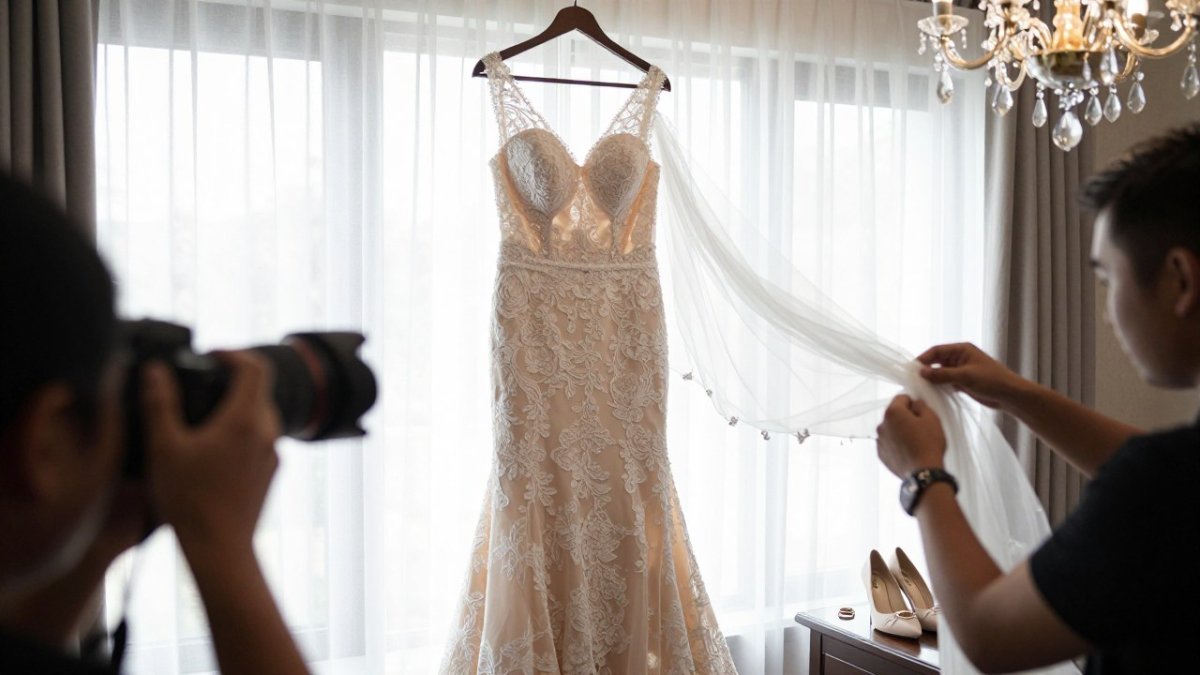
Getting Ready and Detail Photos
Detail photos set the tone for the whole gallery. This is when we photograph the dress, shoes, rings, and personal heirlooms before the day speeds up.
The Wedding Photojournalist Association guide to wedding-day coverage notes that getting-ready images often carry the most emotion of the day.
One insider tip: gather every detail item in one spot before we arrive. Rings, invitations, heirlooms, and your something borrowed all photograph better together than scattered across three rooms.
Ceremony, Wedding Party, and Couple Portraits
After the ceremony, guests want to hug you, and we make room for that rather than rushing past it.
Then come the portraits. Couples and bridal party pictures can be scheduled from 3 to 4:45, which leaves real breathing room. Family portraits take longer than most couples expect: finding everyone, gathering them, and moving through each grouping adds up.
If stiff photos worry you, our guide on avoiding stiff wedding photos walks through how we keep portrait time natural.
A Sample Wedding Photography Timeline You Can Adapt
Here is a sample wedding photography timeline built for a late-afternoon ceremony. Adjust the times to your sunset.
| Time | Phase | What Happens |
|---|---|---|
| 1:00 PM | Coverage starts | Details, getting ready, candid prep |
| 2:30 PM | Wedding party | Group photos before guests arrive |
| 3:00 PM | Ceremony | Ceremony and post-ceremony hugs |
| 3:45 PM | Family portraits | Group photos with family |
| 4:00 PM | Couple portraits | Golden-hour session |
| 4:45 PM | Reception | Grand entrance and events |
This is a traditional timeline. It works because it schedules backward from sunset and leaves buffers for travel.
Want to see how this flows at a real mountain venue? Read our Samantha & James wedding at Della Terra Mountain Chateau for a full day, start to finish.
Building a Colorado Wedding Photography Timeline With No First Look
A Colorado wedding photography timeline with no first look front-loads portraits after the ceremony. That means the couple portrait session, family portraits, and wedding party photos all compete for the same post-ceremony window.
The fix is simple: schedule separate wedding-party photos before the ceremony and keep the couple session tight.
For elopements and smaller weddings, timing works differently. Our guide on planning elopement photography timing covers how to structure a shorter day.
Your Wedding Photography Timeline Template and Coordination Checklist
Use this checklist when you build your wedding photography timeline template. Share it with your planner, venue, and photographer so everyone works from the same set times.
- Confirm ceremony start time and sunset time for your date
- Set coverage start time at least 90 minutes before the ceremony
- Block 45 to 60 minutes for family portraits
- Reserve 30 to 45 minutes for couple portraits near golden hour
- Add 15 to 30 minutes of travel buffer between locations
- Build a weather contingency slot for outdoor plans
- Share the final schedule with every vendor
Before you lock anything in, read our list of questions to ask your wedding photographer before booking. It covers timeline details couples often forget to confirm.
Share Your Priorities With Hillary Moore Weddings
Every timeline starts with what matters most to you: cocktail hour with guests, quiet minutes together, or the dance floor after dark.
At Hillary Moore Weddings, every package includes timeline assistance and planning support. Printing rights to all photos come with every package. Packages are fully interchangeable between photo and video.
Learn more about Hillary Moore Weddings and how we approach a wedding day.
Your timeline is the backbone of your photos. Get it right, and the day feels calm instead of rushed. Hillary Moore Weddings brings over a decade of experience and a fine art, editorial eye to every Colorado wedding. We help you build a realistic photo timeline, organize family portraits, and capture the candid moments that last seconds. Get started with Hillary Moore Weddings and protect the moments you will want to keep.
Frequently Asked Questions
What is a typical timeline for wedding photography?
Most full-day coverage runs eight to ten hours, starting with getting ready and ending after the first dances. Getting ready and detail photos usually take 60 to 90 minutes, wedding party portraits 30 to 45 minutes, family portraits 30 to 45 minutes, and couple portraits 20 to 30 minutes. Ceremony length varies by faith and format. Build in travel time between locations and a cushion for delays. Hillary Moore Weddings builds every Colorado wedding photography timeline around your priorities, then works backward from the ceremony start time.
How do you plan a wedding photography timeline without a first look?
Without a first look, all couple portraits move to after the ceremony, so the post-ceremony block needs 60 to 90 minutes for family, wedding party, and couple photos combined. Many couples use cocktail hour for group photos and join the reception afterward. A Colorado wedding photography timeline with no first look works best when the ceremony is early enough to leave at least an hour of daylight for portraits, and when family members know exactly where to gather. Hillary Moore Weddings can help organize family portraits on the wedding day so the session moves quickly.
When is the best time for wedding portraits in the Colorado mountains?
The hour before sunset gives the softest, most even light in the mountains, but it is also the shortest window. Midday sun at altitude is harsh and casts strong shadows, so plan portrait sessions for early morning or late afternoon when possible. In summer, sunset arrives around 8:30 p.m.; in winter, closer to 4:45 p.m.
How much buffer time should a wedding photography timeline include?
Add 10 to 15 minutes to every transition, and 20 to 30 minutes before the ceremony. Mountain venues often involve gravel roads, shuttle rides, or a short walk to the ceremony site, and altitude can slow guests down. Family portraits also take longer than couples expect: finding everyone, gathering them in one place, and moving through each grouping adds up.
