
Quick Summary
Natural wedding photos come from movement and attention rather than holding still. Give your focus a physical task, use specific prompts, walk instead of posing, and let slow breathing set your pace. A practice engagement session also helps camera-shy couples get comfortable before the wedding day.
- Pick a small physical task, like straightening a boutonniere, to anchor your attention off the lens.
- Use specific questions such as “What was the first thing you noticed about me?” instead of “just relax.
- Take one slow inhale through the nose and a longer exhale through the mouth before each frame.
- Ask your photographer for a short practice walk and agree on a stop signal like “reset”.
- An engagement session lets you practice being photographed so the camera feels familiar by the wedding day.
Table of Contents
- Why Camera-Shy Couples Look Stiff in Wedding Photos
- How to Look Natural in Wedding Photos
- How to Feel Comfortable with Your Wedding Photographer
- Booking an Engagement Session Before Your Wedding Day
- Frequently Asked Questions
Why Camera-Shy Couples Look Stiff in Wedding Photos
Most camera-shy couples look stiff in their natural wedding photos for one simple reason: they are thinking about the camera. Their shoulders lift, their smiles freeze, and their hands don’t know where to go. A photographer can help, but the work starts before the wedding day.
Freezing up is a normal reaction, not a flaw. Our engagement session preparation tips walk you through how to get comfortable before the big day. The fix is practice, trust, and a clear plan for how the shoot will feel.
- Stiff posture from trying to “look right”
- Forced smiles that never reach the eyes
- Hands that hang awkwardly or grip each other too hard
- Eyes that drift to the lens instead of to each other
How to Look Natural in Wedding Photos
Natural wedding photos come from movement and attention, not from holding still. When your mind is on your partner, your face relaxes on its own. The habits below give your attention somewhere else to go.
Anchor your attention on a task, not on the lens. Pick something small and physical: straighten your partner’s boutonniere, fix a strand of hair, or check that a dress train isn’t caught. Couples often relax within a minute once they have a concrete job.
Use short, specific prompts instead of “just relax.” Ask a question that needs a real answer, such as “What was the first thing you noticed about me?” Real answers produce real expressions.
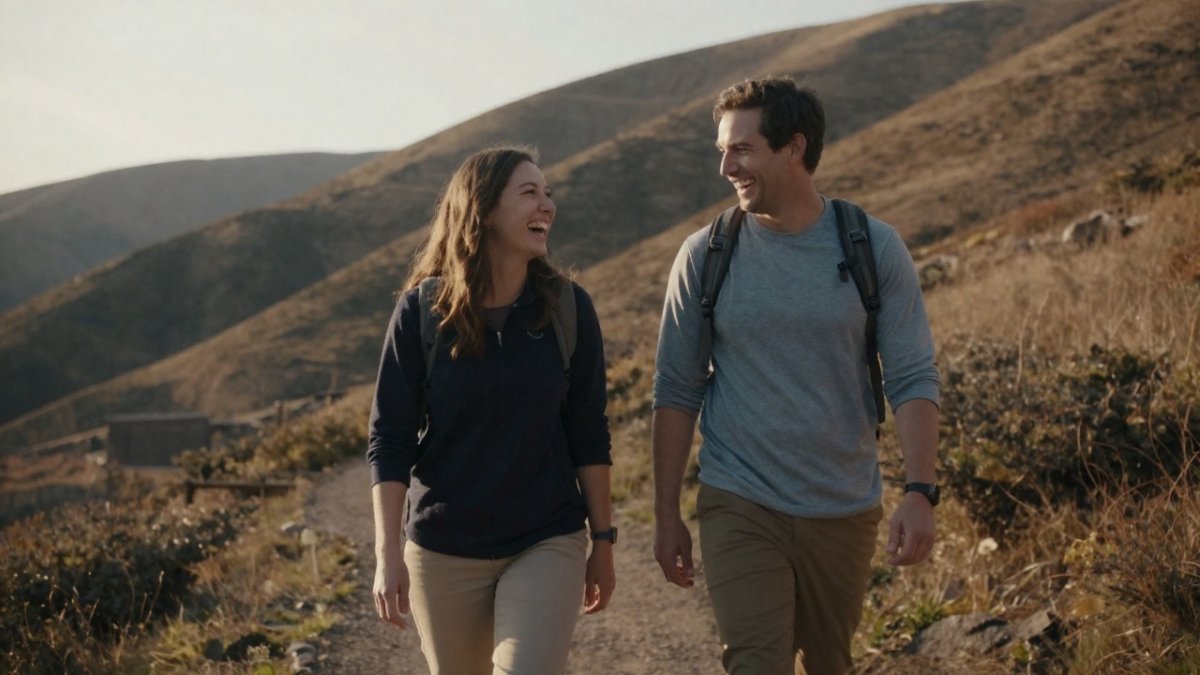
Walk, don’t pose. Ask for a slow walk or small movements, such as turning toward each other on a count of three. Motion blurs the edges of self-consciousness, so request a few minutes of walking before any still frames.
Let your breathing set the pace. Before each frame, take one slow inhale through the nose and a longer exhale through the mouth. A long exhale lowers the shoulders and softens the jaw, which are the two places camera tension shows up first. Doing this together with your partner also gives you a shared rhythm.
Watch out: if you keep checking your phone or the photographer’s face between frames, you are seeking approval, and the next photo will likely look stiff. Ask your photographer to tell you when a shot is done so you can return to your partner.
Try this at your engagement session: pick one anchor task, one prompt question, and one walking sequence, and note which made you forget the camera fastest. Bring that method to the wedding day.
How to Feel Comfortable with Your Wedding Photographer
A photographer who makes you feel at ease understands how to direct people who freeze easily. Most couples never name the problem, so the photographer spends the first hour guessing. Naming your anxiety early changes how the whole session goes.
Tell them exactly what helps you. Instead of saying “I’m nervous,” try a sentence like “When I’m told to smile, my face locks up, so please give me something to do instead.”
Ask these questions before you book. Do they give prompts or let couples move freely? Do they show full galleries of unposed moments? How do they handle visibly uncomfortable couples? Vague answers suggest rigid posing.
Request a short practice walk.
Agree on a stop signal. Pick a phrase, such as “reset,” that means you want a pause to breathe and shake out your shoulders.
Watch out: a photographer who is charming in consultation but rushes you during a shoot is a poor fit, even with a strong portfolio. Trust how you feel during the practice walk more than how polished the portfolio looks.
Bring a short written list of concerns to the first conversation, and check during the engagement session that the photographer’s actions match their promises.
Booking an Engagement Session Before Your Wedding Day
An engagement session is the best practice run you can get. You can read about the lifestyle engagement session approach to see what a shoot involves. You learn how it feels to be photographed, and your photographer learns how you move and react. By the wedding day, the camera feels familiar.
You can browse the engagement archives to see how these sessions look, then review the services and pricing details on the contact page.
Check the website for current session options and pricing. You can review the services offered to choose the session that fits you. Once you have chosen a session, reach out to book your date.
Ready to plan your own natural, relaxed wedding photos? Contact Hillary Moore Weddings to talk through your session and find a style that feels like you.
Frequently Asked Questions
How can camera-shy couples look natural in wedding photos?
Focus on doing something rather than holding still. Movement prompts, such as walking, turning toward each other or swaying, give the body a task and pull attention away from the lens. Talk to your photographer before the day about what makes you uncomfortable so they can plan prompts that suit you. Couples who look at each other rather than the camera usually produce the most relaxed frames, because the photographer is capturing a moment between two people instead of a pose.
What should you do with your hands in wedding photos?
Give your hands a purpose. Hold a bouquet, rest one hand on your partner’s chest or arm, or tuck fingers into a pocket or hair. Avoid pressing hands stiffly against your body or letting them hang awkwardly at your sides. If you feel unsure, ask your photographer for a simple hand prompt during the session. Small, specific placements look far more natural than a tense, carefully arranged pose.
Should camera-shy couples have an engagement photo session first?
An engagement session is one of the most useful ways to get comfortable before the wedding. It gives you a low-pressure chance to practice moving with your photographer, learn how their prompts feel and discover which poses suit you. Many couples find that by the wedding day the camera feels familiar, so the candid moments come more easily. Keep the session relaxed and focused on joy rather than perfect poses.
