
Last Updated: November 17, 2026
Quick Summary
Elopement photography timing means building your entire day backward from sunset, the one part of the schedule you cannot move. Lock in sunset first, block 45 minutes before it for golden hour portraits, then place the ceremony 90 minutes before sunset and work backward through getting ready and travel.
- A typical elopement ceremony runs 15 to 30 minutes, so plan the rest of the day around it.
- Getting ready and detail photos usually need 60 to 90 minutes before the ceremony.
- Family portraits can take 20 to 30 minutes once everyone is gathered in one place.
- Add a 15-minute buffer between every step and full drive time plus 10 minutes for parking and walking.
- If your ceremony has a fixed permit or officiant start time, anchor the schedule to that first.
Table of Contents
- Why Elopement Photography Timing Starts With Sunset
- How Many Elopement Photography Hours Do You Actually Need?
- How Long Is an Elopement Ceremony, and What Comes Before and After?
- Your Elopement Photography Timeline Template
- Elopement Day Timeline Examples by Coverage Length
- Building in Travel Time, Buffer, and Contingency Plans
- What to Ignore When Planning Elopement Photography Timing
- Start Your Timeline With Hillary Moore Weddings
- Frequently Asked Questions
Why Elopement Photography Timing Starts With Sunset
Elopement photography timing is the practice of building your whole day backward from the moment the light is best, not forward from the moment you wake up. Planning an elopement schedule around sunset first, then fitting the ceremony, portraits, and travel around that fixed point, keeps the timeline anchored to the light.
Here is the core idea. Sunset is the only part of your day you cannot move. Everything else can shift by 15 minutes without anyone noticing. So lock sunset down, then work backward.
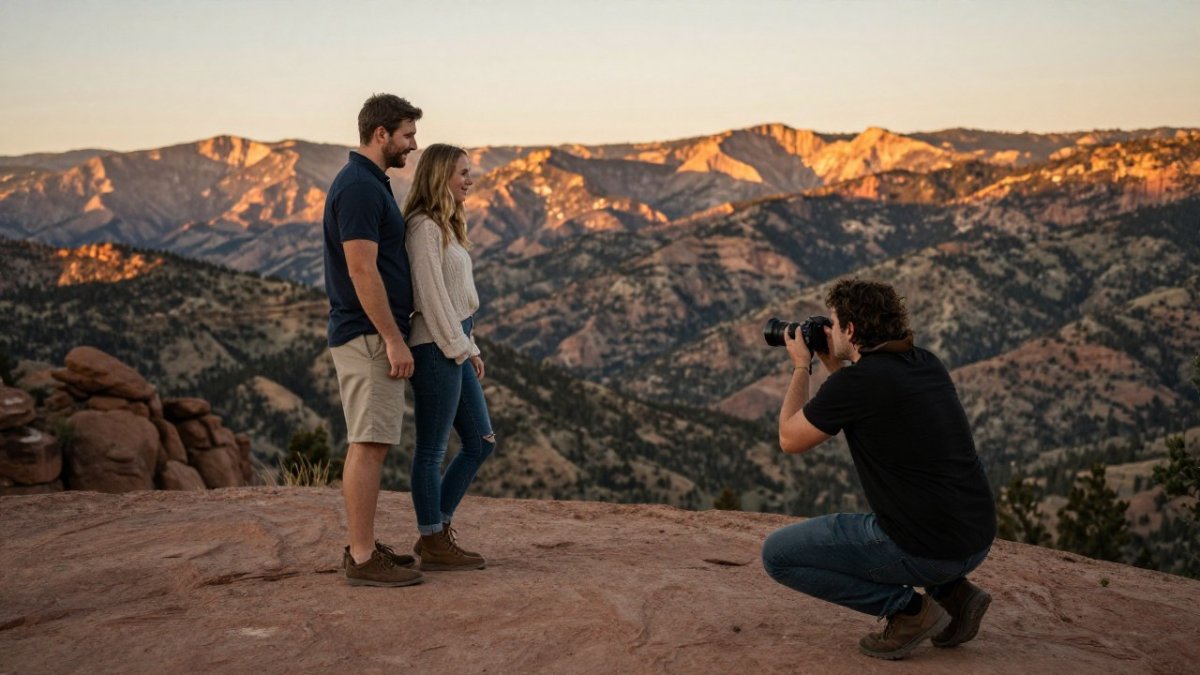
The hour before sunset, often called golden hour, gives you soft, warm light that flatters skin and makes mountain backdrops glow. In Colorado, that window can be short and the weather can turn fast. Planning around it protects the images you will actually frame on the wall.
How Many Elopement Photography Hours Do You Actually Need?
Many elopements are planned around a few hours of coverage, which can include getting ready, the ceremony, portraits, and a relaxed stretch afterward.
The right number depends on your guest list and how far you are traveling between spots.
- Two to three hours: Ceremony and portraits only, no getting ready, one location.
- Four hours: Getting ready, ceremony, portraits, and a short golden hour session.
- Six hours: Everything above plus travel between locations and a first look.
- Eight or more hours: Multiple locations, a reception, or a full day that flows into evening.
How Long Is an Elopement Ceremony, and What Comes Before and After?
A typical elopement ceremony runs 15 to 30 minutes. The rest of your day is the part couples underestimate.
Before the ceremony, getting ready and detail photos usually need 60 to 90 minutes. Detail photos are the rings, the dress, the invitations, and the small things you will want to remember.
After the ceremony comes the part most timelines squeeze out. Guests want to hug you. Family wants a photo. That takes time.
At Hillary Moore Weddings, we build in room for those post-ceremony moments instead of rushing past them. Family portraits alone can take 20 to 30 minutes once everyone is found and gathered in one place. If you are camera-shy, our guide on how to help camera-shy couples relax in photos walks through what that portrait time actually feels like.
Your Elopement Photography Timeline Template
Here is a sample schedule you can adapt. It assumes a four-hour block ending at sunset.
| Time Before Sunset | What Happens | Duration |
|---|---|---|
| 4 hours out | Getting ready and detail photos | 60-90 min |
| 2.5 hours out | First look and couple portraits | 30 min |
| 2 hours out | Ceremony | 15-30 min |
| 1.5 hours out | Family and guest photos | 20-30 min |
| 45 min out | Golden hour portraits | 45 min |
To build your own, follow these steps:
- Look up sunset time for your date and location.
- Block 45 minutes before sunset for portraits.
- Place the ceremony 90 minutes before sunset.
- Add 30 minutes after the ceremony for hugs and family photos.
- Work backward through getting ready and travel.
- Add a 15-minute buffer between every step.
Elopement Day Timeline Examples by Coverage Length
Sample schedules are useful, but only if you know which one fits your day. You can also see a real elopement gallery to picture what a short-coverage timeline looks like. Use the decision framework below first, then borrow the matching sample timeline.
A simple coverage estimator. Add up the blocks you actually need, then round up to the nearest coverage tier your photographer offers:
- Getting ready and detail photos: 60-90 minutes
- First look (optional): 15-20 minutes
- Ceremony: 15-30 minutes, plus 10 minutes of settling-in time before it starts
- Post-ceremony hugs and congratulations: 15-20 minutes
- Family portraits: 20-30 minutes for a small group; add 5-10 minutes for every additional grouping
- Couple portraits: 45-60 minutes at golden hour, or 30 minutes if you also do a first look
- Travel between locations: full drive time plus 10 minutes for parking and walking
- Buffer: 15 minutes between every step
Add those blocks and you have a realistic coverage estimate. If the total lands between tiers, choose the longer tier, the extra time absorbs delays instead of cutting portraits.
| Time Before Sunset | What Happens | Duration |
|---|---|---|
| 4 hours out | Getting ready and detail photos | 60-90 min |
| 2.5 hours out | First look and couple portraits | 30 min |
| 2 hours out | Ceremony | 15-30 min |
| 1.5 hours out | Family and guest photos | 20-30 min |
| 45 min out | Golden hour portraits | 45 min |
This works when getting ready, the ceremony, and portraits all happen in one place or within a short walk.
A sample shape: getting ready at 6 hours out, first look at 4.5 hours out, ceremony at 3 hours out, family photos at 2.5 hours out, a 30-minute drive to a second location at 2 hours out, and portraits from 90 minutes before sunset through the last light. Six hours is the sweet spot for couples who want variety without a marathon day.
A sample shape: details and getting ready at 8 hours out, a relaxed first look at 6 hours out, ceremony at 4 hours out, family photos and congratulations at 3.5 hours out, a location move at 3 hours out, golden hour portraits from 90 minutes before sunset, and dinner or a toast at sunset. This tier suits elopements with a small guest list and a celebration afterward.
What counts toward your hours. Ask your photographer directly whether travel, setup, waiting, and transitions count toward booked coverage, since practices vary and drive time between locations can affect how much photography a booking actually includes. Clarify this before you compare plans, because a cheaper six-hour package that includes an hour of travel can cost more per usable hour than a four-hour package at one location.
Watch out: if your ceremony has a fixed start time set by a permit or officiant, build the rest of the schedule around that anchor first, then fit portraits and travel into the remaining hours, do not assume you can shift the ceremony to chase better light.
Elopement day photography blocks by duration
Building in Travel Time, Buffer, and Contingency Plans
Travel time is often where timelines fall apart. Mountain roads, trailheads, and parking can add minutes you did not plan for, and a single delayed shuttle or closed trail can erase an hour of portraits.
Travel and buffer math. Build a 15-minute buffer between every step. For each location change, add the full drive time plus 10 minutes for parking and walking. If the walk from the trailhead to the ceremony spot takes 20 minutes, that is 20 minutes each way, not once. A common pattern is a couple who budgets 30 minutes for a drive that actually takes 45 on a weekend, then loses their golden hour window to the delay. Drive the route at the same time of day and on the same day of the week as your elopement before you finalize the schedule.
A rain plan. Naming an indoor backup location and setting a decision deadline in the timeline can help you choose between a primary plan and a backup plan. Overcast light is often flattering for portraits, so rain does not automatically mean worse photos, it means different logistics.
Late starts and transportation delays. Ceremonies can start later than planned, so it helps to leave room in the schedule for delays. Protect the portrait window by scheduling family photos before the ceremony if your first look allows it, or by keeping the post-ceremony portrait block separate from the family photo block so a delay in one does not consume the other. If you are relying on a shuttle, rental car, or ferry, have the phone number for a backup ride and confirm the last return time before you book.
Trail closures and access issues. Popular trailheads and parks can close for weather, wildlife, or capacity on short notice. Check the land manager’s website and social channels in the week before your date, and have a second location scouted that offers similar light at the same time of day. If your ceremony requires a permit with a fixed window, confirm the access rules and gate times before you build the rest of the day around it.
A one-page backup schedule. Writing a second version of your timeline with the same anchor (sunset) but swapped locations can help you pivot calmly if the primary plan fails.
Watch out: a ceremony permit with a fixed start time can lock your whole day, so check access rules and permit windows before you finalize anything, and confirm vendor arrival times against them.
What to Ignore When Planning Elopement Photography Timing
Ignore the idea that more hours always means better photos. Extra hours in flat midday light may not add much.
Ignore the pressure to copy someone else’s schedule exactly. Their sunset, their location, and their guest count are not yours.
Ignore the urge to fill every minute. Breathing room lets you enjoy the day and lets your photographer catch moments as they happen.
Candid moments often come from the unscripted gaps between planned events, such as a parent tearing up during vows or a friend laughing mid-toast. If you want more planning guidance to round out these decisions, browse the planning archives.
Start Your Timeline With Hillary Moore Weddings
The hardest part of elopement photography timing is not the math. It is knowing which moments to protect and which to let go. That is where experience helps.
At Hillary Moore Weddings, we bring over a decade of documenting weddings across the U.S., a fine art editorial eye, and an eye for logistics. We can help you build a realistic timeline and organize family portraits. You can review our photography services or reach out through contact and pricing to start planning.
Your elopement deserves a schedule built around light and the moments you care about most. Get started with Hillary Moore Weddings and build a timeline that leaves room to actually enjoy your day.
Frequently Asked Questions
How do you plan an elopement photography timeline?
Start with the time of your ceremony and the sunset time for your date and location, then work backward. Block out getting ready, travel between locations, the ceremony itself, family portraits, and couple portraits. Add 10 to 15 minutes of buffer between each block. At Hillary Moore Weddings, we build the timeline around what matters most to you, whether that is a relaxed cocktail hour with guests or quiet minutes together at golden hour, and we leave breathing room so the day can flow naturally.
How many hours of photography do you need for an elopement?
The right number of elopement photography hours depends on your priorities and travel time, and some elopements are covered for a few hours while others run a full day. The right number depends on your priorities, travel time, and whether you want coverage from getting ready through the reception.
How long should an elopement ceremony take?
A typical elopement ceremony runs 15 to 30 minutes, including a welcome, vows, and a pronouncement. Add 10 to 15 minutes before the ceremony for guests to arrive and settle, and 15 to 20 minutes after for congratulations and hugs. At Hillary Moore Weddings, we plan for those post-ceremony moments rather than rushing past them, because guests naturally want to share their happiness with you right after the vows.
What time of day is best for elopement photos?
The hour before sunset, often called golden hour, gives the softest, warmest light and is the most flattering for couple portraits. If you prefer a sunrise elopement, the first hour after sunrise offers similar light with fewer people around. For midday ceremonies, open shade or portraits later in the day can help soften harsh light.
